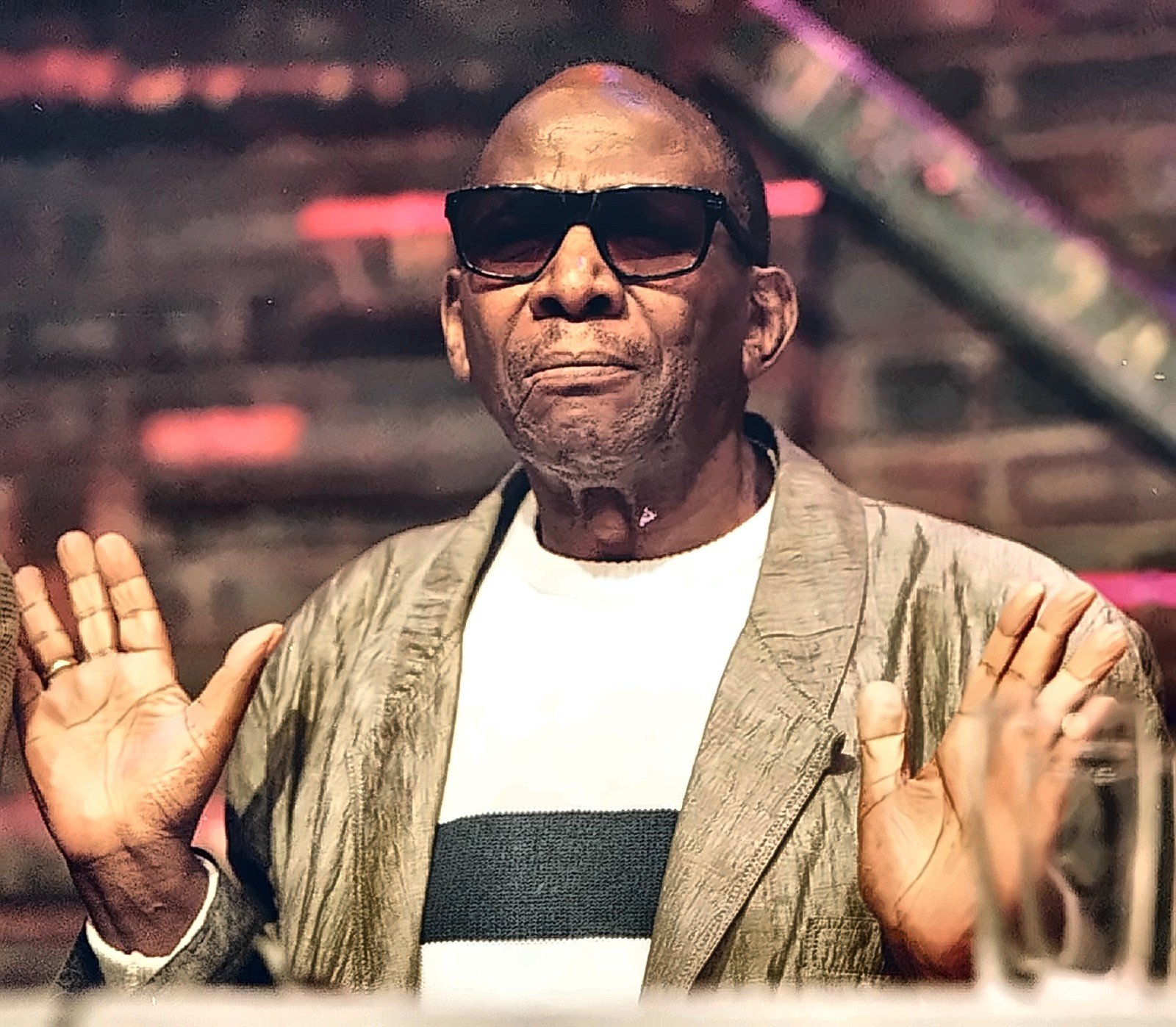
I have never been able to read history as a museum: a place of glass cases and settled verdicts, visited on holidays and left behind at the door. I read it as an argument that refuses to end. And there is a date in that argument I want to sit with. On 23 July 1932, in the crowded township of Duncan Village outside East London, Gibson Mthuthuzeli Kente was born, the man the country would come to call Bra Gib, the father of township theatre, who taught a nation how to see itself in the dark. He drafted no legislation. He commanded no army. He wrote plays. He became the conscience of the nation. And for that, in the end, the (apartheid) state came for him.
Why? What is it that a government fears when it fears a play?
That is the question I want to follow, because its answer does not stay conveniently in the past, and it does not stay conveniently on one side of the colonial line. It runs from apartheid Johannesburg to independent Nairobi: from the security policeman to the post-colonial detention order. The stage, it turns out, is the one institution power has never quite learned to forgive.
The father of township theatre
Kente's road to the footlights ran first through the church choir and the social-work classroom. He trained at a Seventh-Day Adventist college in Butterworth and then at Lovedale in Alice, where he took piano lessons and studied music theory, matriculating in 1953. In the mid-1950s he came to Johannesburg, ostensibly to study at the Jan H. Hofmeyr School of Social Work, but the pull of music was stronger than the pull of the profession. He abandoned his studies, joined Union Artists at Dorkay House, and appeared as a young performer in the landmark jazz musical King Kong. From that apprenticeship he built something entirely his own.
What he built was the township musical: a weave of melodrama, gospel and jazz-inflected song, and variety dance, staged to dramatise the texture of black life in the locations. It began with Manana, the Jazz Prophet in 1963 and the hugely successful Sikalo in 1966, and ran on through Lifa and Zwi. He carried these productions to community halls and church stages the length of the country, to audiences the formal, whites-only theatre had no intention of serving. By the reckoning of the Encyclopaedia of South African Theatre, he trained and launched an estimated four hundred black performers: among them Brenda Fassie, Sello Maake ka Ncube, and Mbongeni Ngema, who would carry the form into the next generation. Consider what that means. He built a school. Not a subsidised one, not a sanctioned one: a school the state never authorised and could never quite close.
The quarrel over what the theatre was for
Honesty about Kente requires holding a tension that the celebratory accounts prefer to smooth away. For much of his early career his theatre was not overtly political, and he was faulted for it. The intellectuals of the Black Consciousness Movement and the South African Students' Organisation, building a militant cultural politics in those same years, at times dismissed the township musical as escapism: melodrama and song where the moment demanded confrontation. Kente himself distrusted the didactic. He believed audiences came to feel and to recognise themselves, not to be lectured.
I want to defend him here, but not in the way his admirers usually do. Steve Biko wrote, in 1971, that "the most potent weapon in the hands of the oppressor is the mind of the oppressed." If that is true, and I have never doubted that it is, then a theatre that handed black audiences back an unbroken image of themselves was not an escape from the struggle. It was one of its quieter fronts. Kente was not a propagandist who set out to topple a government; he was an artist who insisted on the dignity and the fullness of ordinary black life at the precise moment the state's whole machinery was built to deny both. And under apartheid, the mere depiction of that life (its churches and its shebeens, its mothers and its gangsters, its grief and its joy) was itself a political act, whether or not the playwright wrote a single line of manifesto. He did not need to shout to be heard as a threat. He needed only to be seen.
How long?
And then, for a season, he did raise his voice. In the early and mid-1970s Kente turned to a sharper register in a trilogy of works — How Long? in 1973, then I Believe and Too Late in 1974 — that named the pass laws, the police violence, and the daily humiliations of influx control far more directly than his musicals had. He went further and adapted How Long? into a feature film. The state's reply was not ambiguous. In September 1976, at the height of its response to the Soweto uprising, the security police detained him, and the film was suppressed before it could reach a South African screen.
The timing tells the story. Kente's most political phase and his imprisonment fall in the very year the country's children rose in Soweto, and in the year the state was at its most naked. The man the movement had faulted as too soft was jailed for having become, however briefly, too sharp. Those of us who have served in the state know how easily its instinct curdles: how the same machinery raised to protect a public can turn, almost without noticing, to controlling what that public is allowed to see. The line between the permissible and the punishable is never drawn by the artist. It is drawn by the nervous, and it moves whenever the stage comes too close to the truth.
A wider stage: the theatre of witness
Kente was the most popular figure in this theatre, but he was never alone, and the company he kept makes the stakes plain. Across the 1970s and 1980s the South African stage became something close to an uncensored press: a place where what could not be printed could still be performed. In 1972, Athol Fugard, John Kani, and Winston Ntshona devised Sizwe Banzi Is Dead, a scalding meditation on the passbook and the erasure of a black man's name, first staged at The Space in Cape Town and then carried to the world. In 1976 the Market Theatre opened in Johannesburg's Newtown and became, over the decade that followed, the foremost home of anti-apartheid drama: indicting the system before mixed audiences in a country that had outlawed the mixing. The line ran on through Woza Albert! in 1981, devised by Percy Mtwa, Mbongeni Ngema, and Barney Simon, and reached the world's stages with Ngema's Sarafina! in 1987. This tradition, surveyed in the Encyclopædia Britannica, was not an ornament at the edge of the struggle. It was a front within it.
Why could the theatre do this work? Because of everything it is that a pamphlet is not. A play cannot be confiscated at a border or jammed on a frequency. It happens in a room, among gathered people, in the living voice, and it vanishes the instant it ends — leaving behind not evidence but memory, and something more dangerous than evidence: the shared feeling of strangers who have recognised one another in the dark. A censor can ban a script. He cannot un-ring the bell of an audience that has wept and laughed together at its own condition. That is why, across the whole colonised world, the theatre has so often been the last institution the powerful move to control, and the first they fail to silence.
The irony after freedom: Ngũgĩ and Kamiriithu
Here the argument turns, and turns painfully. If the apartheid state's fear of the stage could be dismissed as the pathology of a racist regime defending the indefensible, then surely independence and majority rule would set the artist free. The life of Ngũgĩ wa Thiong'o (the towering Kenyan writer who died on 28 May 2025, at the age of 87) is the refutation of that comfortable hope.
In 1977, already celebrated as a novelist writing in English, Ngũgĩ wrote a play in the Gikuyu language with Ngũgĩ wa Mirii — Ngaahika Ndeenda, "I Will Marry When I Want", and staged it not at the Kenya National Theatre but at the Kamiriithu Community Education and Cultural Centre in Limuru, on an open-air stage the community raised with its own hands. The cast were not professionals. They were the workers and peasants of Kamiriithu, performing the story of their own dispossession in their own tongue. That is precisely what made it intolerable: it democratised the stage, taking theatre out of the hands of a lettered elite and returning it to the people whose lives it described.
The independent Kenyan state answered exactly as the colonial and apartheid states had. The licence was withdrawn, the play was banned, and at the close of 1977 Ngũgĩ was detained without trial under the Public Security Act and held in a maximum-security prison for close to a year. Read that again. This was not the settler regime in Pretoria. It was the government of Jomo Kenyatta: the independent republic that, fifteen years earlier, had lowered the Union Jack. Ngũgĩ himself understood the lesson with terrible clarity: "I have been writing in English over the years and nobody ever bothered with me. I write one play in Gikuyu and I'm detained, so I'm going to write in Gikuyu." The theatre itself was judged the true offender. In 1982 the Kamiriithu stage was razed to the ground, and its author left for an exile that would last more than two decades.
Why power fears the stage
Set the two men beside each other and the pattern resolves into a principle. In apartheid Johannesburg, a musical that showed black life too vividly summoned the security police. In independent Nairobi, a play performed by peasants in their mother tongue summoned a detention order. The regimes were opposites in ideology and in legitimacy; their instinct toward the stage was the same. Both grasped, more clearly than their critics sometimes did, that the theatre is not merely a mirror held up to a society. It is a rehearsal of that society's possibilities: a room where a community gathers, recognises its own power, and imagines an order other than the one it has been told is permanent.
That is the inheritance we would rather not name. The impulse to silence the artist belongs to no single system. It is a temptation of power as such, and it does not evaporate when the oppressor changes colour or the flag changes design. The Nigerian playwright Wole Soyinka, who wrote from his own prison cell under a post-colonial government, put it at its starkest in The Man Died: "The man dies in all who keep silent in the face of tyranny." Ngũgĩ's cell was furnished with statutes inherited almost intact from the empire that independence had defeated. The post-colonial state is not the automatic guardian of the freedoms in whose name it was won. It can just as easily become the heir to the colonial state's nervousness: its licences, its permits, its preventive-detention laws, its readiness to mistake an assembled audience for a conspiracy.
Let me be honest about the men themselves, because the argument is stronger for it, not weaker. They were not saints. Kente was a popular entertainer long before he was ever a dissident, and was faulted by his own comrades for it. Ngũgĩ was a Marxist intellectual whose politics stayed contested long after his courage ceased to be. But their purity was never the point. The point is what their treatment reveals about the states that could not leave them alone, and a state, like a person, is judged less by the art it commissions than by the art it can bear to watch without reaching for the police.
We in South Africa paid in blood for the right to see ourselves honestly, and that gives us a particular duty of memory. The theatres that once smuggled the truth past the censor are free now. The harder task, the one that is never finished, is to make sure that freedom is never again mistaken by those who govern for a threat. The measure of the democracy that Kente's generation helped to imagine is not whether it can compose an anthem or raise a monument. It is whether it can sit in the dark, watch an unflattering play about itself, and let the artist walk home. That measure is not banked once and kept. It is renewed, or it is forfeited, in every decision the powerful make about what they will tolerate being said. The stage the apartheid state could not forgive, and the stage the Kenyan state razed, are one warning addressed to every government that comes after: the community that gathers to tell its own story is not the enemy of the nation. It is the nation, rehearsing how to be free.
In the beginning I posed the question, why did the apartheid regime come for Bra Gib? The answer could be found in Ben Okri's Astonishing the Gods, where he writes:
"The equestrian rider was on a high diamond platform. With the hand bearing the shining sword of truth, he was pointing ever-forward to a great destiny and destination, never to be reached, because if reached the people and their journey would perish. He was pointing to an ever-moving destination, unspecified except in myth, the place of absolute self-realisation and contentment which must always be just beyond the reach of the brave land, but not so much beyond reach that the people would give up in perfection's despair, and set up tent somewhere between the sixth and final mountain."
The apartheid regime had mortal fear for the people's poet, the popular artist and author, the popular playwright whose talent, genius and playwriting skills, summoned the people towards ever-expanding greatness. Bra Gib was that equestrian rider who pointed the way forward to the oppressed, that greatness lay not in conquering the summit, but in the perpetual, disciplined refusal to mistake any temporary plateau for the final peak. His fatal fault was being the people's prophet, the bearer of the "shining sword of truth", who always spoke the truth to power, the truth many were too scared to utter. We dare not fear our equestrian riders, for all the sharpness of their tongue, for they carry a heavy weight of being the conscience of the nation, bearing the shining sword of truth!
“The future is not an accident.”
Dr Malusi Gigaba is a Scholar-Statesman, an ANC NEC Member, a former Cabinet Minister of the Republic of South Africa, a Member of Parliament, and a member of both the Joint Standing Committee on Defence and the Portfolio Committee on Trade, Industry and Competition.